Welcome to the ultimate resource for Class 10 English Notes. If you are looking for comprehensive Class 10 English Notes to prepare for your board exams, you are in the right place. These chapter-wise Class 10 English Notes cover summaries, important questions, and grammar to help you score high.
Best Class 10 English Notes for Board Exams
📚 NOTES PAGE(CATEGORY)
- Chapter 1 – Attitude is Altitude
- Chapter 2 – Success Story
- Chapter 3 – I Will Do It
- Chapter 4 – The Dear Departed
- Chapter 5 – The Brave Potter
- Chapter 6 – The Journey
- Chapter 7 – Ikat
- Chapter 8 – A Tale of Three Villages
- Chapter 9 – Monkey and Crocodile
Nick Vujicic


📘Class 10 English Notes Chapter 1 – Attitude is Altitude
Introduction
“Attitude Is Altitude” is an inspiring lesson that teaches us that success depends on attitude and determination. Furthermore, it highlights the importance of self-confidence and positive thinking in life. Because of this, a positive mindset plays a key role in achieving our goals.
About Nick Vujicic: Class 10 English Notes
Nick Vujicic was born without arms and legs. However, he faced many challenges in his life. Instead of giving up, he stayed strong and worked hard. Consequently, he developed a positive attitude towards life. Ultimately, he became a famous motivational speaker who inspires people around the world with his courage and confidence.
📘 Attitude Is Altitude – Complete Notes
Summary
Nick Vujicic was born without arms and legs. As a result, he faced many challenges during his childhood. At times, he felt sad and discouraged. However, he never gave up in life. Instead, he stayed positive and worked hard to overcome difficulties. Consequently, he achieved great success and became an inspiration for millions of people. Today, he works as a motivational speaker and encourages others to believe in themselves.
Question & Answers
Q1. Who is Nick Vujicic?
A. Nick Vujicic is an Australian motivational speaker who was born without arms and legs.
Q2. What message does the lesson give?
A. The lesson teaches that a positive attitude and strong determination help us overcome difficulties in life.
Q3. Why is Nick an inspiration?
A. Nick is an inspiration because he achieved success despite physical challenges. Furthermore, he motivates people to stay strong and positive.
Q4. What is the importance of attitude?
A. Attitude decides how we respond to problems. Therefore, a positive attitude leads to success.
Short Answer Questions
- Where was Nick Vujicic born?
- What difficulties did he face?
- How did he overcome his problems?
- What lesson do we learn from his life?
Moral of the Lesson
“Your attitude decides your altitude.”
In conclusion, a positive attitude, hard work, and self-confidence lead to success. Therefore, we should never give up in life.
English Notes-Chapter 2
📘Class 10 English Notes Chapter 2 – Every Success Story
Introduction
“Every Success Story is also a Story of Great Failures” is an inspiring lesson that teaches us that failure is a normal part of success. However, successful people do not stop after failure. Instead, they learn from their mistakes and continue moving forward. Therefore, we should never lose hope during difficult situations. Rather, we must treat failure as an opportunity to improve.
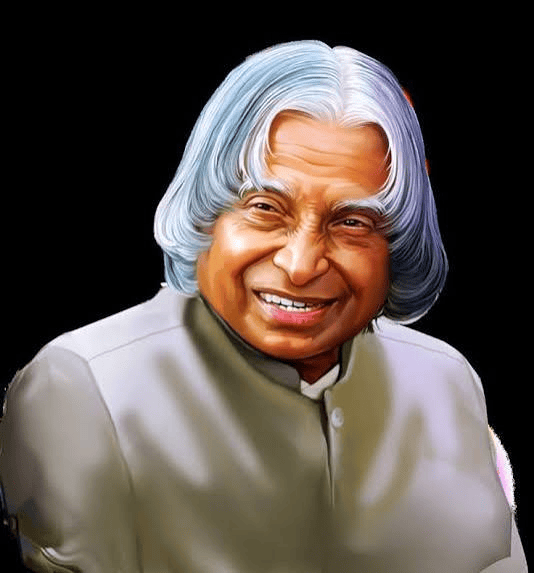
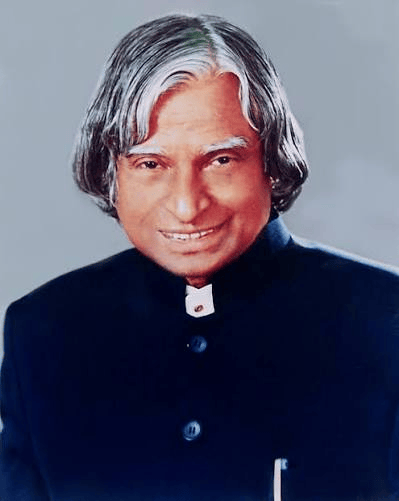
Moreover, this lesson is based on the life and thoughts of Dr. A.P.J. Abdul Kalam. His life journey clearly shows that hard work, dedication, and self-confidence lead to great success.
About Dr. A.P.J. Abdul Kalam
Dr. A.P.J. Abdul Kalam is popularly known as the “Missile Man of India.” He played an important role in India’s space and missile development programs. Furthermore, he became the President of India and inspired millions of students with his life and ideas.
One of his most famous quotes is:
“Dream, dream, dream. Dreams transform into thoughts and thoughts result in action.”
Therefore, he always encouraged young people to dream big, work hard, and achieve their goals.
Dr. A.P.J. Abdul Kalam
📘 Every Success Story is also a Story of Great Failures – Notes
Summary
Every success story includes failures and challenges. In fact, many successful people face setbacks before achieving success. However, they do not give up easily. Instead, they learn from their mistakes and continue working hard. As a result, they achieve success in their respective fields. Therefore, hard work, patience, and determination are very important for success. Most importantly, self-confidence plays a key role in achieving goals.
Question & Answers
Q1. What is the main message of the lesson?
A. The lesson teaches that success comes through failures. Therefore, we should learn from our mistakes and keep trying.
Q2. Why are failures important?
A. Failures are important because they teach us lessons. Moreover, they help us improve and grow in life.
Q3. What qualities are needed for success?
A. Hard work, determination, patience, and self-confidence are needed. In addition, a positive attitude is also important.
Short Questions
- What is failure?
- How can we achieve success?
- Who is Dr. A.P.J. Abdul Kalam?
- What is the role of mistakes in life?
Long Answer
Explain the importance of failure in success.
Failure is a part of life. Although it feels disappointing, it teaches valuable lessons. Furthermore, it helps us identify our weaknesses and improve ourselves. Every successful person faces failure at some stage. However, they learn from it and move forward. As a result, failure builds experience, confidence, and strength. Therefore, we should never fear failure.
Moral of the Lesson
👉 “Failures are the pillars of success.”
In conclusion, failures should motivate us instead of stopping us. Consequently, every failure becomes a stepping stone to success.


English Notes-Chapter 3
📘 Class 10 English Notes – The Journey
Summary
“The Journey” is a story about the author’s father who was a hardworking and responsible man. Although he was poor, he never gave up in life. Instead, he continued working hard to support his family. Moreover, he taught his children important values such as honesty, discipline, and perseverance.
As a result, his children learned strong life lessons from him. Therefore, the lesson highlights the sacrifices made by parents and shows the importance of hard work in life.
Character Sketch of Father
- Hardworking
- Honest
- Responsible
- Caring
- Disciplined
- Self-respecting
Moral of the Lesson
Parents make many sacrifices for their children. Therefore, we should respect them and learn values such as honesty, hard work, and dedication.
Short Questions & Answers
Q1. Who is the central character in the lesson?
A. The author’s father.
Q2. What qualities did the father possess?
A. He was honest, hardworking, disciplined, and responsible.
Q3. What message does the lesson convey?
A. Hard work and good values lead to success.
Q4. Why is the lesson titled “The Journey”?
A. It shows the father’s life journey filled with struggles and achievements.
Exam Point
👉 “Hard work, honesty, and perseverance are the keys to success.”
English Notes-Chapter 4
📘 Class 10 English Notes – An Icon of Civil Rights
Summary
“An Icon of Civil Rights” is about the life and achievements of Martin Luther King Jr. He was a great leader who fought against racial discrimination in the United States. Moreover, he believed in non-violence and peaceful protest as the best way to bring change.
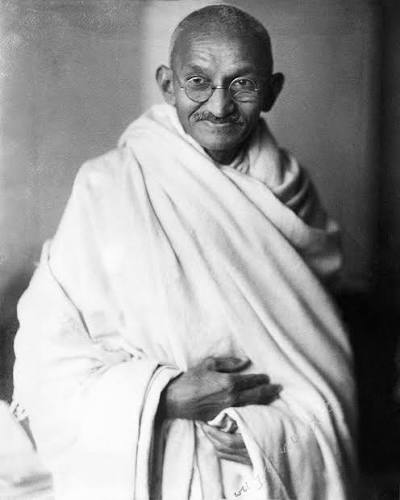
Inspired by Mahatma Gandhi, he led movements to demand equal rights for African Americans. As a result, his efforts brought major social change in society. Therefore, he played an important role in promoting justice, equality, and human rights.
Mahatma Gandhi
Character Sketch of Martin Luther King Jr.
- Courageous
- Determined
- Peace-loving
- Inspiring leader
- Advocate of equality
- Social reformer
Moral of the Lesson
Non-violence, courage, and determination can bring positive social change and justice.
Short Questions & Answers
Q1. Who was Martin Luther King Jr.?
A. He was a civil rights leader in the United States.
Q2. Who inspired Martin Luther King Jr.?
A. He was inspired by Mahatma Gandhi.
Q3. What method did he use in his struggle?
A. He used non-violent protests.
Q4. What was his dream?
A. His dream was a society where all people are treated equally, regardless of race.
Exam Point
👉 “Injustice anywhere is a threat to justice everywhere.” – Martin Luther King Jr.
The Brave Potter

English Notes-Chapter 5
📘 Class 10 English Notes Chapter 5 – The Brave Potter
Summary
A poor potter lived in a village. One day, he slipped and got a scar on his forehead. Later, due to a famine, he left his village and went to another kingdom.
There, the king noticed his scar and believed that he was a brave soldier. As a result, the king appointed him as a military commander.
However, when the kingdom was attacked, the potter became very scared because he had no experience of war. Finally, he told the king the truth about how he got the scar.
Although the king was angry at first, he later appreciated the potter’s honesty. Therefore, he forgave him and understood the importance of truth.
Short Questions & Answers
Q1. Who was the brave potter?
A. He was a poor potter who was mistaken for a brave warrior.
Q2. How did the potter get the scar on his forehead?
A. He got the scar when he fell on a broken pot.
Q3. Why did the king appoint him as a commander?
A. The king thought the scar was a battle wound and believed he was a brave soldier.
Q4. Why was the potter afraid of war?
A. He was afraid because he had no experience of fighting.
Q5. What did the potter tell the king?
A. He told the truth about how he got the scar.
Moral of the Story
“Honesty is the best policy.”
In conclusion, the story teaches us that truth is always better than pretending. Therefore, honest people earn respect, trust, and dignity.

English Notes-Chapter 6
📘 Class 10 English Notes Chapter 6 – The Dear Departed
(Part – I)
Summary
he play is about an old man named Abel Merryweather and his twodaughters, Mrs. Slater and Mrs. Jordan. Suddenly, one day, the family mistakenly believes that Abel has died.
However, instead of mourning his death, the daughters start arguing over his property. She even takes his clock before her sister arrives.
As a result, the play highlights the selfishness and greed of the daughters. It also shows how they value wealth more than love and respect. Therefore, the story humorously exposes family hypocrisy.
📘 The Dear Departed (Part – I) – Short Notes
Short Questions & Answers
Q1. Who is Abel Merryweather?
A. He is the old father in the play.
Q2. Who are Abel’s daughters?
A. Mrs. Slater and Mrs. Jordan.
Q3. Why did Mrs. Slater take her father’s clock?
A. She wanted to keep it before her sister could claim it.
Q4. What is the main theme of the play?
A. Greed and selfishness among family members.
Q5. What does the play teach us?
A. We should respect and care for our elders.
Story
Respect and love your elders. Therefore, we should not value money more than family relationships.
📘 Class 10 English Notes –The Dear Departed (Part – II)
Summary
In Part II, Abel Merryweather is still alive. After the confusion in Part I, he comes downstairs and observes his daughters’ behavior.
However, Mrs. Slater and Mrs. Jordan try to act innocent and polite in front of him. Moreover, they hide their greed and pretend to care for him.
As a result, Abel understands their true nature. He feels hurt and disappointed because his daughters are only interested in his property. Finally, he decides to change his will and live independently, away from his selfish family.
Short Questions & Answers
Q1. What happens when Abel comes downstairs?
A. He finds his daughters pretending to be caring and polite.
Q2. How do the daughters behave in front of Abel?
A. They act innocent and hide their greed.
Q3. What does Abel realize?
A. He realizes that his daughters are selfish and money-minded.
Q4. What decision does Abel take at the end?
A. He decides to change his will and live separately.
Q5. What is the main message of Part II?
A. People may hide their true nature for money, but truth is eventually revealed.
Moral of the Story
Do not be greedy. Therefore, we should always respect our parents and elders sincerely.


English Notes-Chapter 7
📘 Class 10 English Notes – The Journey (Mark Twain – Adaptation)
Summary
The story is about a young boy who wants to explore the world on his own. He is curious and excited to experience life outside his home.
During his journey, he meets different people and observes the world around him. However, he soon realizes that life is not always easy. He faces several challenges along the way.
As a result, he understands that experience is the best teacher. Therefore, the journey changes his thinking and helps him learn the importance of knowledge, maturity, and real-life experience.
📘 The Journey (Mark Twain – Adaptation) – Short Notes
Short Questions & Answers
Q1. Who is the main character in the story?
A. A young curious boy.
Q2. What does the boy want to do?
A. He wants to travel and explore the world.
Q3. What does he learn from his journey?
A. He learns that life has challenges and experience is important.
Q4. What is the theme of the story?
A. Life experience and self-learning.
Q5. Is the journey easy for the boy?
A. No, he faces difficulties and learns from them.
Moral of the Story
We learn the most important lessons of life through real experiences and challenges.
English Notes-Chapter 8
📘 Class 10 English Notes – The Story of Ikat
Summary
The lesson explains the traditional art of Ikat weaving. Ikat is a special fabric-making technique in which threads are dyed first and then woven into cloth. As a result, beautiful patterns appear only after weaving.
The story begins when a student becomes curious after seeing Ikat fabric. Then, the teacher explains how it is made and why it is special. Moreover, Ikat is famous in Telangana and other parts of India for its rich cultural value.
Therefore, the lesson highlights the hard work of weavers and the importance of preserving traditional art.

📘 The Story of Ikat – Short Notes
Short Questions & Answers
Q1. What is Ikat?
A. Ikat is a traditional method of dyeing and weaving fabric with unique patterns.
Q2. What makes Ikat special?
A. In Ikat, designs are created by dyeing threads before weaving.
Q3. Where is Ikat famous?
A. It is famous in Telangana and other parts of India.
Q4. Who explains Ikat in the lesson?
A. The teacher explains Ikat to the students.
Q5. What is the main theme of the lesson?
A. The importance of traditional crafts and weavers.
Moral of the Story
We should respect and preserve traditional art and support skilled craftsmen.

English Notes-Chapter 9
📘 Class 10 English Notes – A Tale of Three Villages
Summary
This lesson compares the conditions of three different villages. One village is well-developed with good facilities like education, electricity, and employment. Moreover, life there is comfortable and well-organized.
The second village has some basic facilities; however, it still faces several problems in daily life. In contrast, the third village is very poor and lacks basic needs such as water, electricity, education, and proper roads.
As a result, the lesson clearly shows the difference between developed and underdeveloped villages. Therefore, it highlights that development depends on government support, good leadership, and awareness among people. It also emphasizes the need for equal development in all villages.
📘 A Tale of Three Villages – Short Notes
Short Questions & Answers
Q1. How many villages are described in the lesson?
A. Three villages.
Q2. What is special about the first village?
A. It is well-developed with good facilities.
Q3. What problems does the third village face?
A. It lacks water, electricity, roads, and education.
Q4. What is the main theme of the lesson?
A. Rural development and inequality.
Q5. What does the lesson suggest?
A. All villages should get equal development.
Moral of the Story
Every village deserves equal development and basic facilities for a better life.
English Notes-Chapter 10
📘 Class 10 English Notes – The Monkey and the Crocodile
Summary
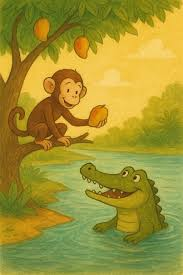
This Panchatantra story is about a monkey and a crocodile who become friends. The monkey lives on a berry tree near a river and shares fruits with the crocodile. Moreover, the crocodile takes the fruits home and shares them with his wife.
However, the crocodile’s wife becomes greedy and demands the monkey’s heart. As a result, the crocodile tricks the monkey and invites him to his home. On the way, he reveals the truth.
Fortunately, the clever monkey understands the danger. He says that his heart is on the tree and asks to return. Therefore, the crocodile takes him back, and the monkey quickly escapes. In the end, the crocodile loses his friend because of greed.
📘 The Monkey and the Crocodile – Short Notes
Short Questions & Answers
Q1. Who are the main characters?
A. The monkey and the crocodile.
Q2. Where does the monkey live?
A. On a berry tree near the river.
Q3. Why did the crocodile betray the monkey?
A. Because his wife wanted the monkey’s heart.
Q4. How did the monkey save himself?
A. He used his intelligence and said that his heart was on the tree.
Q5. What is the theme of the story?
A. Intelligence and presence of mind can save life.
Moral of the Story
Use intelligence in difficult situations. Therefore, we should avoid greed because it can destroy relationships.

🌟 Best Wishes
Dear Student,
Believe in yourself and trust your preparation. You have worked hard, and now it is time to stay calm, focused, and confident.
✔ Read all questions carefully before answering
✔ Write neat, clear, and well-structured answers
✔ Manage your time wisely during the exam
✔ Do not panic if a question seems difficult
✔ Revise important points before starting the exam
💯 Remember: Success comes from consistency, practice, and confidence.
Stay positive and give your best effort.
🌟 All the very best for your exams! 🍀